
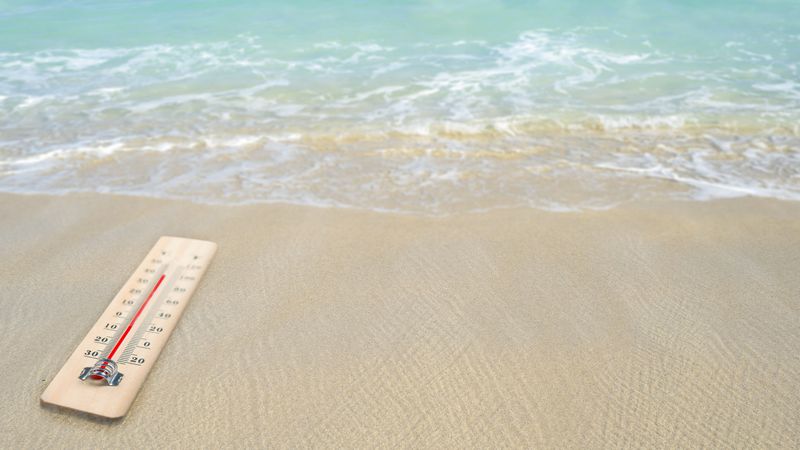
Marine heat waves, which are prolonged periods of unusually high sea surface temperatures, are posing a growing threat to humans’ physical and mental health, researchers said.
Extreme ocean temperatures can contribute to more intense weather systems, increasing the risks of injury, death and displacement from storms and flooding.
Writing in a comment for the journal Nature Sustainability, the researchers from Australia’s Adelaide University and the University of Hong Kong outlined how marine hea twaves can trigger a cascade of effects—worsening extreme weather events, reducing seafood supplies and increasing mental health challenges for coastal communities—eventually affecting human health.
As the planet continues to warm, marine heat waves have become more frequent, longer lasting and more intense.
The extreme weather events have already been linked to mass mortality events affecting marine life, widespread coral bleaching, harmful algal blooms and major disruptions to fisheries and aquaculture.
The researchers said the environmental changes can have profound consequences for people, which receive much less attention.
Lead author Laura Falkenberg, from Adelaide University’s school of physics, chemistry and earth sciences, said, “Marine heatwaves are no longer just recognised as an environmental issue; they are increasingly also perceived as a human health issue.”
“Our paper highlights that these events can influence people’s health in many different ways, both directly and indirectly. They can intensify storms and atmospheric heatwaves, affect the availability and safety of seafood, disrupt livelihoods and contribute to anxiety, grief and other mental health impacts in communities that depend on healthy oceans,” Falkenberg said.
Harmful algal blooms, which are expected to become more common due to marine heat waves, can contaminate seafood and pose serious health risks, the paper added.
In the long term, declining fish stocks and reduced seafood production threaten food security for billions of people worldwide, the researchers said.
The paper also highlighted the psychological impacts of witnessing the loss of marine ecosystems and the stress experienced by people whose livelihoods and cultural identity are closely connected to the ocean.
The authors argued that governments and public health agencies should begin treating marine heat waves in much the same way they prepare for land-based heat waves.
This means incorporating marine heat wave forecasts into public health planning, considering health impacts in marine and coastal management decisions, and improving collaboration between ocean scientists, health authorities and resource managers, they said.
Falkenberg said if action is taken before the crises occur, it would help communities become more resilient as marine heat waves continue to intensify.
“When marine ecosystems suffer, the impacts ripple through communities. We are seeing increasing evidence that these changes can contribute to eco-anxiety, grief and other mental health challenges, particularly for people who feel deeply connected to the marine environment,” the lead author said.
“Recognising these health impacts is the first step towards better protecting communities,” she said.
