
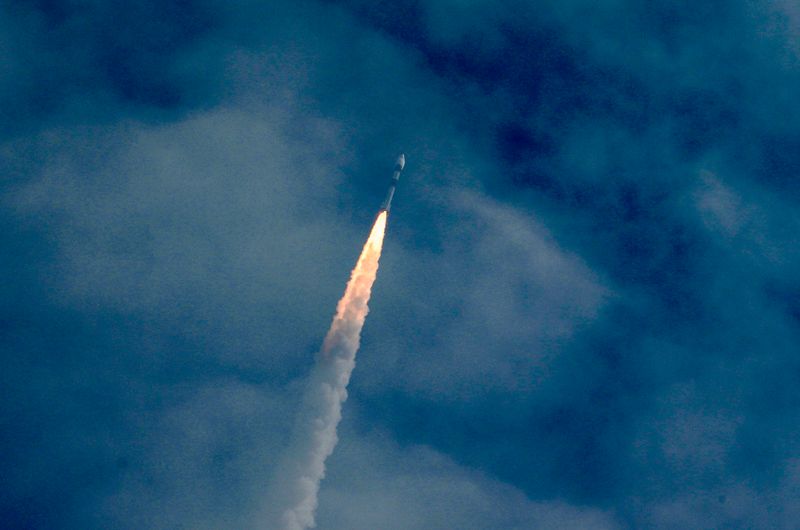
India’s PSLV-C62 rocket mission failed on Monday after an anomaly during its third stage, leading to the loss of 15 out of 16 satellites on board. However, a small capsule named KID (Kestrel Initial Demonstrator), developed by Spanish startup Orbital Paradigm, managed to separate from the rocket and transmit data.
#WATCH | Sriharikota, Andhra Pradesh: The PSLV-C62/EOS-N1 mission launches from Satish Dhawan Space Centre (SDSC-SHAR).
PSLV-C62 will carry EOS-N1 and 15 co-passenger satellites. EOS-N1 and 14 co-passengers are planned for injection into Sun Synchronous Orbit; the KID capsule is… pic.twitter.com/b4mrfQMTM2
— ANI (@ANI) January 12, 2026
The PSLV-C62 rocket was launched by the Indian Space Research Organisation (ISRO) from Sriharikota at 10.18 am as part of its first mission of 2026. While the first two stages worked normally, ISRO said disturbances and deviation from the flight path were observed during the third stage.
Because of this failure, several important satellites were lost, including Anvesha, a surveillance satellite developed by DRDO, AayulSat, India’s first in-orbit fuelling satellite and multiple student-built satellites.
Our KID capsule, against all odds, separated from PSLV C62, switched on, and transmitted data. We’re reconstructing trajectory. Full report will come. [Edited from previous version]
— Orbital Paradigm (@OrbitalParadigm) January 13, 2026
Orbital Paradigm said its KID capsule “against all odds” separated from the rocket, switched on, and sent back data. The company is now reconstructing the capsule’s trajectory. KID is a technology demonstrator designed to test atmospheric re-entry and is a prototype for a future vehicle that could return payloads from space to Earth.
ISRO confirmed the anomaly on X and said a detailed analysis is underway. ISRO Chairman V Narayanan stated that the mission did not follow the expected flight path and that the space agency will share more details after reviewing the data.
The PSLV-C62 mission encountered an anomaly during end of the PS3 stage. A detailed analysis has been initiated.
— ISRO (@isro) January 12, 2026
This is the second consecutive setback for ISRO’s PSLV missions, following a similar failure in May 2025 due to motor pressure issues.
