
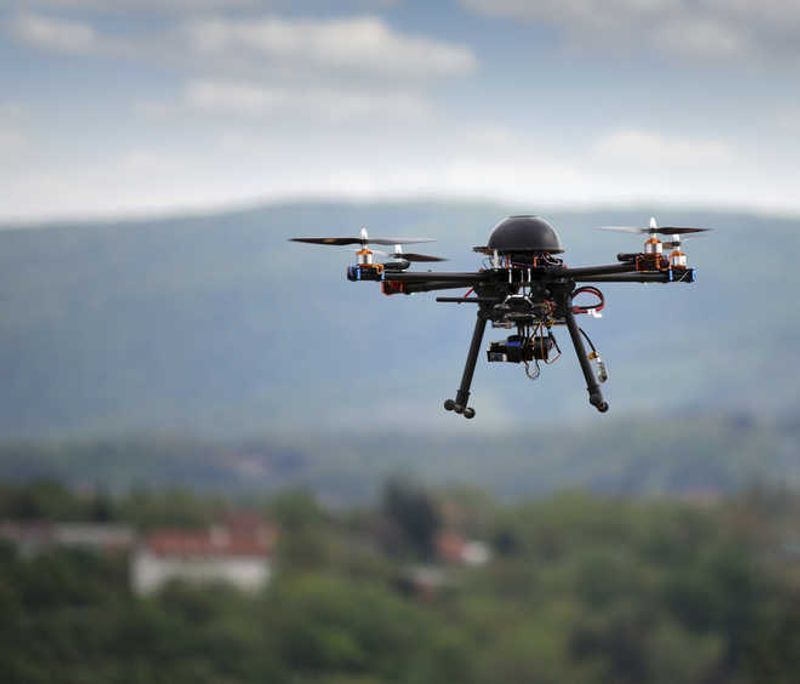
Indian researchers have developed a long-range, ground-based radio command-and-control system for unmanned aerial vehicles (UAVs) operating over distances of up to 1,000 km. The system offers an alternative to conventional satellite communication links, which face certain operational limitations.
UAVs are increasingly being deployed for surveillance, disaster response, environmental monitoring, logistics and defence applications, creating a growing need for reliable beyond-line-of-sight (BLoS) communication over extended distances.
“Conventional UAV communication systems largely depend on satellite links or terrestrial infrastructure, both of which may be unavailable, expensive, congested or vulnerable in remote and contested environments,” the researchers said.
Maintaining connectivity during long-range missions, particularly in areas without communication infrastructure, remains challenging. Link quality can be affected by distance, terrain, atmospheric conditions, interference, platform mobility and deliberate electronic attacks.
According to the researchers, high-frequency (HF) skywave communication offers a potentially valuable alternative or complementary mechanism, as ionospheric propagation can support communication over hundreds to thousands of kilometres without relying on satellites or continuous terrestrial networks.
The study developed a satellite-independent BLoS communication framework combining HF propagation with cooperative airborne relay networking, adaptive relay and frequency selection, anti-jamming capabilities, HF-adapted security and command-and-control evaluation.
Operating in the HF band of 3-22 MHz, the architecture connects a command centre with a remote UAV or aerial terminal, either directly or through a network of airborne relays. The system was evaluated against a reference mission range of 900 km.
The study was conducted by five researchers from the Manipal Institute of Technology, Bengaluru; Dayananda Sagar University, Bengaluru; Motilal Nehru National Institute of Technology, Allahabad; Indian Institute of Information Technology, Bhopal; and Haldia Institute of Technology, West Bengal. The findings were published in Nature’s Scientific Reports on November 19.
Emphasising that reliable command-and-control (C2) communication is fundamental to safe UAV operations, the researchers said communication reliability in contested environments cannot be considered independently of electromagnetic and cyber survivability.
Long-range C2 links may face several threats, including barrage jamming, reactive or follower jamming, radio-frequency direction finding, spoofing, replay attacks and traffic interception.
The researchers also highlighted the growing importance of electromagnetic survivability in contested communication environments. Alongside physical-layer threats, cybersecurity remains critical for mission-critical wireless communication.
Cryptographic authentication, authenticated encryption, sequence validation and counter-based anti-replay mechanisms are widely used to protect message integrity, freshness and authenticity against spoofing and replay attacks, the study noted.
