
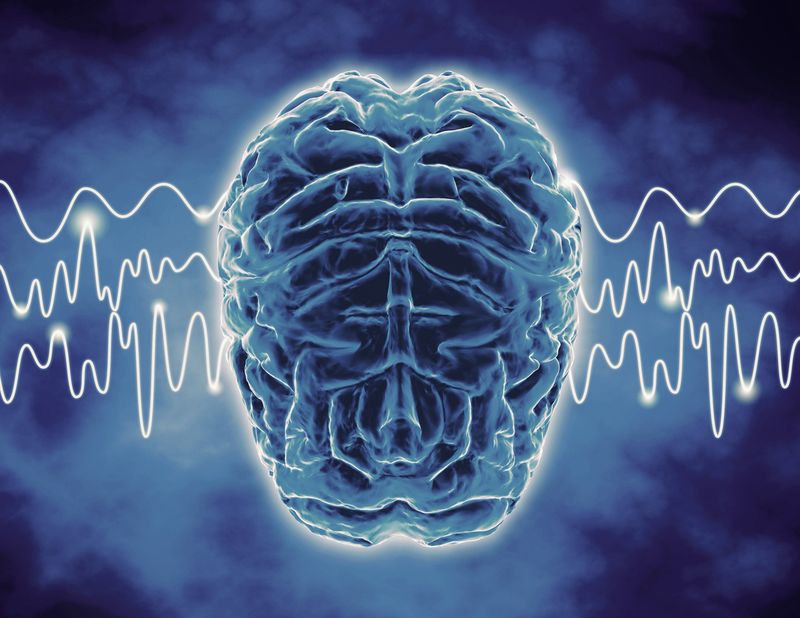
Frequency of alpha waves in the parietal cortex — the brain region that processes sensory information from the body — determines how precisely we perceive our body as our own, according to a new study.
Faster frequencies of the brain waves could result in a more precise sense of body ownership, while slower frequencies could make it harder to separate self-related sensations from external ones, weakening the distinction between body and world, findings published in the journal Nature Communications show.
Researchers from Sweden’s Karolinska Institutet looked at how the brain combines visual and tactile (touch-related) signals to create a feeling that a body part belongs to oneself — a phenomenon known as the sense of body ownership.
An analysis of behavioural experiments and brain recordings from 106 participants showed that the frequency of alpha waves in the parietal cortex — the brain region that processes sensory information from the body — determines how precisely we perceive our body as our own.
Alpha waves are the brain’s electrical activity that is at play when one is in a relaxed, alert and calm state, often with eyes closed.
“We have identified a fundamental brain process that shapes our continuous experience of being embodied,” lead author Mariano D’Angelo, researcher at Karolinska Institutet’s department of neuroscience, said.
“The findings may provide new insights into psychiatric conditions such as schizophrenia, where the sense of self is disturbed,” D’Angelo said.
The participants were engaged in a ‘rubber hand’ task. When touches on a visible rubber hand and the participant’s hidden real hand were synchronised, many reported feeling that the rubber hand was part of their body — but when the timing was off, the feeling faded, the researchers said.
They also found that those with faster alpha frequencies were more sensitive to timing differences between touches that were seen and touches felt.
The individuals noted smaller differences in timing, as if their brains operated at a higher temporal (time) resolution, resulting in a more precise sense of body ownership, the team said.
However, slower alpha frequencies were linked to a broader “temporal binding window”, causing the brain to treat out-of-sync visual and tactile signals as if occurring together.
The reduced precision in timing made it harder to separate self-related sensations from external ones, thereby weakening the distinction between body and world, the researchers said.
