
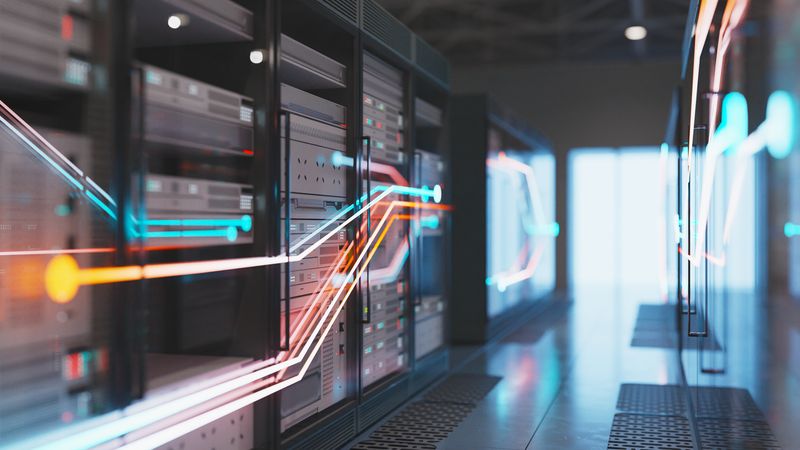
Every time you use an AI chatbot, get a movie recommendation, make a UPI payment, upload a reel or store photos in the cloud, you are using a data centre. You may not see it. You may not hear it. But somewhere, inside a massive building filled with endless rows of blinking machines, your data is being processed in seconds. These are the factories of the digital age.
And today, the biggest reason they are multiplying so fast is artificial intelligence.
Data is the new fuel and data centres are the refineries. Without a strong data centre infrastructure, India cannot compete in the global AI race. Besides, these create direct and indirect jobs, attract foreign investment, support startups and innovation.
What exactly is a data centre?
In very simple words, it is a large building packed with powerful computers called servers. These servers store data (photos, emails, documents, videos), process transactions (banking, payments, shopping), run websites and apps, and support cloud and AI services.
Think of your mobile phone as a small shop. A data centre is the giant warehouse that supports millions of such shops at the same time.
US companies like Google, Amazon and Microsoft and India’s AdaniConneX and Nxtra operate huge data centres to ensure their services never stop. If data centres shut down, much of the Internet would simply go dark.
AI, the big demand driver
Until a few years ago, data centre growth in India was mainly driven by social media, online shopping, OTT platforms, digital payments and government services. But now, AI has changed the scale of demand.
Artificial intelligence does not just store data. It learns from massive amounts of it. Training an AI model requires feeding it billions of data points and running thousands of high-end graphics processing units (GPUs), which handle massive volumes of calculations simultaneously. India currently has about 38,000 GPUs. In comparison, the US is estimated to be operating roughly 1.5 million such GPUs and China half a million. One data centre can house hundreds of GPUs.
Why so much electricity?
Here is where the story becomes serious. A normal data centre already runs 24 hours a day. But AI-focused facilities consume massive power due to energy-hungry GPUs, nonstop operations and intensive cooling systems, with some facilities using as much electricity as small towns.
AI racks, especially those packed with high-end GPUs, can draw 30-100 kilowatts (kW) per rack, compared to roughly 5-20 kW for traditional server racks. That means AI setups can consume several times more power than older systems.
India’s data centres are estimated to have consumed roughly 12-15 terawatt-hours (TWh) of electricity in 2024. Over the next five years, that number could rise sharply, potentially crossing 40-50 TWh.
And why so much water?
Most people do not connect the Internet with water. But cooling systems often rely on it. A 100-megawatt AI data centre can require up to nearly 2 million litres of water per day, comparable to what a small city might consume daily. As India’s total data centre capacity expands, cumulative annual water consumption could run into tens of billions of litres. In hot regions where summer temperatures cross 40°C, cooling systems work harder. That means more electricity use and more water consumption. In water-stressed cities like Bengaluru or Chennai, this has raised concerns.
Towards greener AI infra
The industry is aware of the environmental concerns. Many companies are responding by using renewable energy through solar and wind agreements, adopting efficient cooling technologies such as liquid cooling, using treated wastewater instead of fresh water, and building energy-efficient facilities. There is also increasing emphasis on “efficient AI”, focused on developing models that require less computing power and consume fewer resources.
Opportunity and risks
You may never enter a data centre. But every time you ask an AI assistant a question, use online banking, watch a live cricket match, upload photos or read digital news, you are relying on these silent digital factories. AI may feel invisible, but the infrastructure behind it is very real, made of steel racks, wires, cooling towers and enormous power connections.
In the US, rapid AI-driven data centre expansion is facing mounting resistance. Locals, farmers and environmental groups have protested against proposed facilities over worries about grid strain and higher power costs and water use. Northern Virginia’s Data Centre Alley, widely regarded as the world’s largest data centre hub, alone may require around 16.6 GW.
India’s AI boom is not slowing down. Startups are building new tools. Companies are adopting automation. Governments are using AI for public services. All of this requires powerful data centres.
The opportunity is huge in terms of economic growth, technological leadership and innovation. But so is the responsibility. Can India expand its AI-driven data centre network while protecting its electricity grids and precious water resources? That balance will define whether India’s digital future is just powerful, or truly sustainable.
