
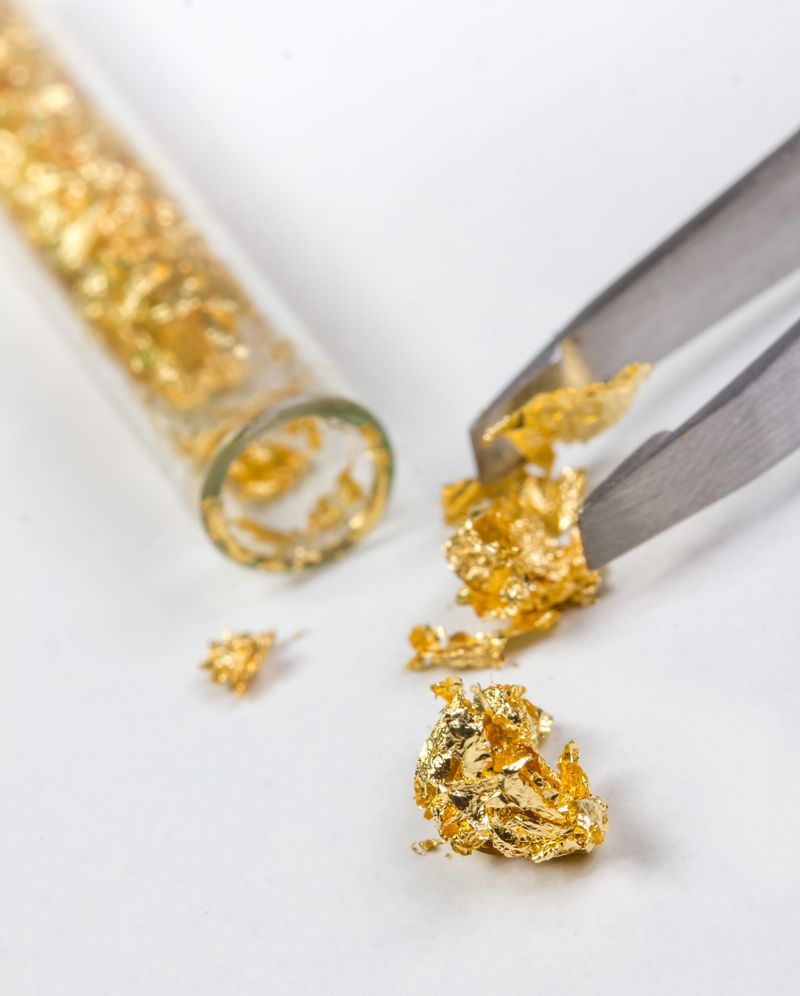
Much like lab-grown diamonds, scientists are now experimenting with ways to produce gold in laboratories.
In India, gold is more than an investment or adornment. It carries profound cultural meaning and is used as a sacred offering during Lakshmi puja, so the idea of lab-grown gold adds a fascinating twist to an age-old tradition.
While this technology is still evolving and far from mainstream, it signals a major shift in how we produce one of most treasured metals.
This push toward innovation is not without reason. Gold-mining is a resource-heavy industry, marked by massive land disruption and heavy water use. Adding to that, large quantities of waste is generated, much of which is often discharged without adequate control.
Lab-grown gold presents the possibility of a more sustainable and environment-friendly alternative. But, unlike lab-grown diamonds, it is not yet a cheaper option. Producing it requires advanced technology and strictly controlled laboratory conditions, keeping costs high for now.
However, as research advances and production becomes more efficient, prices could significantly fall.
What remains clear is that lab grown gold is real gold as it is chemically and physically identical to mined gold. The difference lies in how it is produced.
Instead of extracting it from the earth, scientists use advanced techniques or refine recycled gold to make it pure.
Science may be ready to reshape the industry, but whether consumers are ready to embrace the change is a question that only time can answer.
